Episode Transcript
[00:00:00]
[00:00:07] Speaker B: The City the BABAL Podcast where we bring together top actors in the smart city arena, sparking dialogues and interactions around the stakeholders and themes most prevalent for today's citizens and tomorrow's generations.
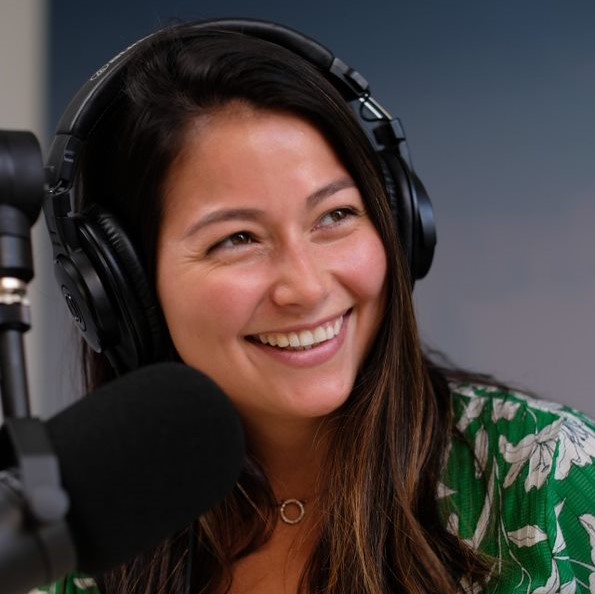
I am your host, Tamlin Shimizu and I hope you will enjoy this episode and gain knowledge and connections to accelerate the change for a better urban life.
Smart in the City is brought to you by Babel Smart Cities. We enable processes from research and strategy development to co creation and implementation. To learn more about us, please visit the Babel platform @Babel SmartCities EU.
Welcome back everyone to another episode of Smart in the City. This episode will be hosted by one of my colleagues on the ground, so I hope you enjoy the change of voice and pace and I'll catch you next time.
[00:00:58] Speaker C: Hello everyone and welcome to another episode of our Urban Future series which we are recording live at the 2026 edition in Ljubljana. I'm Greto Schach, Head of Markets and Partnerships for Southern Europe at Babel and I'm very happy to host today's episode. In this episode we will be zooming in on a challenge many cities know well. How to take care of historic centers in a way that protects its identity, keeps it livable and and still allows it to evolve. Our guest today is Ricardo Ferreira da Silva, Program Manager at Puerto Vivo Urban Rehabilitation Society, Portugal.
Welcome.
[00:01:36] Speaker A: Hi Gretchel.
[00:01:38] Speaker C: It's a pleasure to have you today. And before we start into the conversation and everything, we always like to ask a little bit of a warm up question, if that's okay.
[00:01:49] Speaker A: It's okay, no problem.
[00:01:51] Speaker C: I would like you to travel in time, take us to Porto in 2050.
So 30 years from now, then come back to us and let us know how does Porto look like in 2050? What is the maybe one big change from today's Porto?
[00:02:12] Speaker A: Okay, well, of course we can't imagine how will be Porto and 30 years from now, but I, I do know how expect Porto to be and well, I think Porto should have in that time, more mobility solutions for citizens, especially in downtown, less cars. And what I really wanted was to have more families living there because that's the big challenge right now because there are people living in, in downtown, but every day it's, it's more difficult to, to, to live there if you have a family, if you have a dog, if you have sons.
So that's what I, I expect Porto, especially in downtown area to be. It's a, a more inclusive city for citizens with less cars, more mobility solutions and, and these aspects that that make life easier for families like schools, good supermarkets. And I think that's it.
[00:03:44] Speaker C: That's a portal. Definitely want to live and experience. So let's see how we bring that 2050 vision into today's reality.
But before we get into that, I think it would be great to learn more about you. What's your background? What led you into your current role?
[00:04:03] Speaker A: Okay, well, I'm a civil engineer and I made lots of things before I became a project manager.
I work in design, structural design, first of all, because my father was also, well, Steve, but not working anymore. He's retired, but he also was a civil engineer. And well, I started working with him for six months, but we couldn't get along together in a professional way, of course.
And then after doing structural design, I went into a contractor for two years and then I went into the railway infrastructure holder in Portugal for seven years. And that's when I started making project management.
And afterwards I went into Porto Vivo and it was 18 years ago.
And I continued being a project manager, of course, and with a different role, not in railways anymore. And it was in. In that moment, we're talking about 207. It was a big challenge because in that time Porto, especially Porto's downtown, Porto's historic center was in very, very bad shape with lots of ruins and lots of empty buildings. And it was a big challenge for me to take part of that, started this kind of work of reversing this situation.
[00:05:45] Speaker C: I think that's a journey we will get into in this conversation.
Maybe one last thing for background for people who may not know Porto in real life, they just see it in pictures, maybe on Instagram. How would you describe that historic center as a place that people actually live in today?
[00:06:07] Speaker A: Well, Porto Historic center is not just a piece of image.
It's a lived and involving environment.
Alongside with its heritage building buildings, you will find everyday life, Porto citizens, elderly residents.
Especially at the medieval area, there are lots of elderly residents, students, small business, of course, new arrivals, a lot of tourists. And it's a place where you.
Where you can still see laundering, hanging from balconies, where local citizens coexists with cafes and short term rentals.
The reality is a balance, sometimes fragile of course, between authenticity and authenticity and pressure from tourism.
[00:07:07] Speaker C: And I like that you bring this image of how this historic center looks like and feels like and the many aspects that you need to balance, because I think you are already going into this direction. When you are working on rehabilitating a historic center, there are many aspects and systems and areas that overlap. So there is housing, public space, local economy with the visitors and the tourism mobility. So the transport aspect, the heritage, how do you preserve that? So in that kind of environment, what helps these different departments from the city? Everything. Everyone who's responsible for these different areas to move from being just consulted and sharing their opinion and their view, to really be part of that decision making.
[00:08:04] Speaker A: Yeah, that's a very important issue.
I think what makes the difference is usually the governance structure.
It's not enough to consult departments. We need to share goals, to align timelines.
And often a coordinating body will real authority. That's really important.
Data sharing helps, of course, but trust and continuity matters even more.
When teams see that decisions have tangible outcomes and responsibilities, collective rather than siloed, then collaboration becomes more natural.
In our case, we're having mayors aligned with our goals.
And our CEO is.
Has been always the city council for urbanism.
So that's very important because is the one who is also responsible for public space, for mobility.
So in fact is in the top of this all these departments, the only department that is not in his structure. Well, lots of them are not. But important ones, really important ones, is culture.
Because when we're talking about historic center and historic center, there is world heritage.
For every hole you dig, you need an archaeologist and you need authorization from this.
This department of culture that is from the central state is not from the municipality.
And what we had and what we do have that is very important is that we meet with them in a regular basis and analyzing specific projects in order to give guidelines to the project holders in order to make things go more swiftly.
[00:10:40] Speaker C: And I think that's a great example of how these variables, they all come together at the same time. Because you are looking into either rehabilitation or new construction. And you need to take care of also preserving the heritage. There might be things that you are not aware that are underground, that when you start digging or doing any works, they come up.
So there are a lot of these layers and interconnections that you have in this project.
So it's not just about buildings.
Buildings is one element of everything that makes a neighborhood a lively neighborhood. So how do you tell that a neighborhood is really coming back to life? And I think you already pictured that city center coming back to life. But how do you really tell this is happening?
[00:11:40] Speaker A: First of all, we must look at the building locked not by an active, but we must look at it as a house, as a home.
And that changes the whole perspective.
It's less about buildings and more about rhythms of daily Life.
You see it when schools reopen or fill up, when local citizens return, when public spaces open are used throughout the day, not just by visitors, but also by residents.
By residents.
I guess diversity is the key, this mix.
In the case of the Historic center, it's very important. This, of course, this balance is difficult because if you're living in a place you won't be happy if it is fulfilled the tourists every day.
And by the other hand, if you are a tourist, you always wanted to see the locals living there. You don't want to be in a touristic spot all the time.
So it's.
But you also need tourists in order to improve your economy.
So it's a big, very difficult balance.
[00:13:11] Speaker C: It is, it is. And I think that's a, that's a concern many cities have. Like, how do you keep that really as a balance and not just, well, a historic center that was rehabilitated, that's full of tourists, but no one can afford.
So it does happen that the more you create value of that out of that space and the. Is more of this push investments and so on. So how, how do you respond to this concern of cities that are trying to, to reach that balance?
[00:13:47] Speaker A: Well, what we, we have done in our case was that we had one thing that was good, that we had a lot of buildings owned by the municipality, especially in, in the medieval part that we call modern Mor. It's like the cathedral hill.
So all these buildings, we renewed them for affordable housing.
Most of them were empty, some of them were occupied. But we, we agreed with people that were living there as they could return after the construction works works in two or three years. We relocated them for a while and then they came back and they did.
It's interesting thinking that some of those people that we talked, that we've talked with in that moment didn't want to return.
So you can see how the Historic center was in that time. People didn't want to come back first. If you asked same people today, do you want to go there? Do you want to go to. To live there? Probably the answer would be different. They would want to come back. But in that moment they didn't.
Some of them did, of course, and, and came back.
So that's one, one model, but I guess you don't have one answer.
It's a mix, it's a blend of answers.
Another thing that we do is we do public private partnerships with private investors, but they must put the duelings in housing, not in short rental.
Of course, in order to do this, we have to give them some incentives.
Lower taxes, tax benefits, lower taxes for licensing in order to, to. To make possible for investors to, to, to. To keep the housing for, for. For housing and not for shorter rental and not for hotels.
Of course we also want hotels. So we must put all these fruits in a salad cup and mix them together, right?
[00:16:35] Speaker C: Yeah, yeah, yeah. And I think this is, this. Go back to the, the idea of this balance, finding this balance in, in the measures that you're combining. And I think there is something that I want to pick up because you're not doing this alone. You're also incentivizing private sector to be part of the measures that are taking to revitalize this area. And so you also mentioned these tax incentives as well. To kind of. Yeah. Incentivize ultimately the private sector to take that step, to go in the direction that you are imagining that. That historical area. To. Yeah, to. To become better. To be also a place that people enjoy. So are there to unlock this progress? Are there any other funding or financing setup or measures that you are using to motivate these other stakeholders?
[00:17:36] Speaker A: I guess flexibility is the key.
But blended finance models, combining public, public funding, private investment, sometimes European or national programs tend to work best.
But just as important is having tools that allow cities to steer outcomes. For example, conditional funding tied to long term residencies. That's what I was talking about.
Affordability tied to affordability. Housing for affordable housing, mixed used purposes.
It's not just about how much money you spent, but how strategically it's deployed. I guess that is the key.
[00:18:25] Speaker C: And I see, I also read from what you're saying is the city has this role of steering the direction of these partnerships and how these investments are done. And there might be some money or incentives available, but they need to be in line with the vision that the city has. Like affordability housing that's for the local. So you get that mix and not just, you know, let them run and do as like of course naturally will happen in the market. You give a direction. So you, you are an important city stakeholder. They're marking the vision and how that should be executed.
[00:19:02] Speaker A: Yes, that's the thing.
[00:19:04] Speaker C: And I gather this is not an easy task.
Your job is absolutely not easy.
But what do you think it's the main challenge that Porto needs to address today and what would help it accelerate the answer to that challenge?
[00:19:28] Speaker A: Well, a central challenge I guess is maintaining affordability and resident diversity in the historic center.
That's really difficult.
That's a real challenge while still supporting economy, vitality Housing pressure is huge now and I guess all over the world, but we do have this problem in the portal.
I guess to accelerate this change will require stronger tools for housing policy, more coordinated regulation, and of course, continued investment in public. In public services that make center more alive, not just attractive.
I guess to live in an area, people need to have almost everything there.
So investing in services for living, I guess that would be an.
One of the answers because again. Because again, there's not a single answer for none of these problems.
[00:20:42] Speaker C: Yeah, yeah. And every city has its own constraints and their backgrounds, also culture, like how locals see their historical places, the city center, how they interact with the city.
Let me challenge you there.
How viable do you think is that possible to find that balance, that strike between affordability and livability in places that are so in high demand, like Porto City center and the flow of tourists?
[00:21:23] Speaker A: Yes and no.
Yes and no. And why I. I say that because yes, in some areas.
Let me give you an example. You can't make housing around Eiffel, Eiffel Tower.
It's such a monument, a visited monument by tourists. So that's. It's something that will not happen.
So same thing will happen and is happening in some areas in historic center.
But there are other places where we have. And I guess there will always be people living.
Of course we have another problem. That is when we're talking about Oldtown buildings are not large, you have to keep facades, you have to keep windows, you have to keep wooden structures, you have to keep me masonary walls.
So it's very difficult to have a building big, a big dueling there for a big family.
[00:22:40] Speaker C: And I would say those are the real constraints.
[00:22:43] Speaker A: So it's possible to have families living. And in the center of the city especially we're talking about historic center, but not in all areas. In some areas. And that's. We have to be realistic and that's what we are doing.
[00:23:06] Speaker C: Yeah. So you're working with those constraints that come from the buildings that are there, the heritage that's there, with what people would actually do in those spaces. Right. And what are those spaces allowing for?
I think that's a, that's a good reflection of how, how you deal with those constraints, the possibilities and how you. You plan around that.
Is there.
Could you like. Do you have any example in mind where there was something that looked good in paper, like saying, oh, we want affordable housing. Right. Who would be against that?
Something that looked good in paper, but then in reality did not work that well?
[00:23:51] Speaker A: Yeah, that's. This is what we were talking about bringing families to the historic center, that's really difficult. And we have some cases where we could do that.
But in fact it's very difficult because if you have two sons in this moment, you will need a car because you, you don't have a school close by. You don't have supermarkets with prices for living. You, of course you have supermarkets, but prices there are for tourists, not for locals.
And that is the.
In the beginning we had this romantic view of determining and the plans to use for some buildings.
We, we, we.
Some buildings we said this must be a kindergarten, this must be a school.
But in the end it's very difficult to, to make privates to do this.
We, we have done it in some cases, but that's still a work to do.
That's why I think it's the challenge for, for 2050.
And that is what I think. That did not went as well as we wanted because we could keep a lot of residences there, residents there that we, we achieved.
We have new residents, but not big families. We have small families, monoparental families, people living young people.
For those it's possible to, to, to, to.
To create housing. But for families it's really difficult.
[00:26:08] Speaker C: Yeah, yeah, yeah. And that is, yeah, that's something that you need to work around. Okay. That plan did not work out, that you had a vision you executed, did not go as well, then you likely are. Okay. How do we adapt now that we know this will not exactly as we envision it.
Great.
And looking ahead, what do you think? Because there has been a lot of work that you have done, like there are families or people, locals living in Porto City Center. You are rehabilitating a lot of the buildings. So what do you think other cities can learn from Porto's experience?
That is genuinely transferable because. Because there are things that are very local to Porto. And what is more specific to your context?
[00:26:59] Speaker A: Well, I think the most important thing is to be aware that we need integrated approaches.
The value of phased rehabilitation and the need to balance heritage preservation with contemporary contemporary use.
Also the idea that regeneration is as much social as it is physical.
What is most specific in Porto is its scale and governance context and the timing, particularly how national policies, EU funding and market conditions aligned. At certain moments, other cities can learn from the principles, but they'll need to adapt them to their own institutional and social realities.
Because again, it's very important to do this approach together with private sector taking advantage of this European Union funds.
That was very important in our case. Without it, it will Be almost impossible also with national programs for funding. For funding. And we have to be of course aligned with politicians in order to introduce tax benefits and lowering taxes for licensing.
All these matters.
[00:28:51] Speaker C: Yeah. And that is quite a work of coordination that you make sure that the funding is there, the tax incentives and so on. And the partners also. How do you like, what's your signal that you look into a partner to know they are committed to the pathway that you are going for?
[00:29:16] Speaker A: Well, it's like when you, you meet someone, you have an expectation, but you really need to. To get to know her, get to know her before you are sure.
So with, with a private investor is the same. Of course you can look at its portfolio and see what it has done already.
But the only way is to start doing things.
Usually we make contests in order to choose our private investors. First we make rounds speaking with everyone. That's very important to find the best approach in order to launch the contests. We must be, we must be very certain about the conditions that the market is will to accept. Accept. That's very important.
And I guess this is the, the, the, the only way is to talk with lots of people with lots of investors.
It's also important to be part of conferences like this Urban Future where you meet nice people with very good experiences. And we can learn a lot by having these experiences and by being part of this kind of conferences.
[00:30:55] Speaker C: Yeah, I see that a big part of is like being creative, thinking outside of the box, like where that solution might come from or how do you approach this partnership. So it's valuable for everybody.
How do you get from standard negotiation to okay, we can offer them this while they bring that value. And I think that's also something that sparks these conversations with other people practitioners that you get to learn. Ah, that's a very smart solution.
[00:31:27] Speaker A: Yeah. Well, talking about that this morning there was this presentation of an architect that I met yesterday, Scott David, I don't know if you're going to listen to this podcast, but it showed us an incredible solution. Usually we are used to see the sidewalks interrupt for roads.
Imagine the contrary roads interrupt for sidewalks.
[00:31:59] Speaker C: I love that.
[00:32:01] Speaker A: If you want mobility for pedestrians, that's a very good solution. You don't interrupt sidewalks, you interrupt the street.
[00:32:09] Speaker C: Indeed, indeed. I like that. And that's I think the type of mindset that shift from perspective that we need to create livable cities that where people want to leave, want to walk, want to spend their time on the streets. But also yeah. In places where like are very livable neighborhoods before we move to our segment, I want to give you the open floor in case we miss something. Something that you want to share from your project's perspective. Experience.
[00:32:42] Speaker A: No, I guess we've talked about almost everything.
Just say that for those who have never been to Porto, that they should do it in a short time because it's a very, very interesting city with very interesting people and not as expensive of most of capitals and cities along Europe.
[00:33:11] Speaker C: I can definitely second that I've been in Porto and it's a fascinating place. Food, drinks, everything that's absolutely amazing. But also the history and heritage. The heritage, you see that right away when you are in Porto. And that's a very unique place, I would say, in Europe. So encouraging everyone listening then to this episode to go visit Porto and also kind of see first, firsthand also the work that you have been doing in the city center.
Then let's move then to our segment, which is a shout out, shout out.
[00:33:56] Speaker B: Mention a person, an organization or a city you think deserves more recognition in the field.
[00:34:05] Speaker A: Well, that's a difficult question. Why? Because of course I've been in not a lot, but in some cities along Europe with great historical centers like Madrid, Vienne, Paris and others, Budapest.
But one thing very important in order to classificate the, the value is the money that you have to spend.
So if you do it without having resources, then you are a champion.
In our case, we have an example that I used that I use a lot in Porto we have, and it's part of the world heritage complex, is a double deck bridge that we have with a steel arch that is don't wish primator bridge.
And it's, it has more than 100 years and you can't find bridges like that one across Europe. And why is that?
Probably don't know the answer, but the answer is because most of other countries that had this kind of bridge, they had the money to replace them.
And because we didn't have the money to replace it for a long time, we had to maintain it.
And now it's an incredible landscape in Porto city and an incredible monument. Really, really beautiful. And the upper deck, now it's for, for subway, for, for the metro. And the, the lower deck still is used for, for cars in these days only in a short period after 7 o' clock in the media, in the afternoon and until 8 o', clock, I guess in the morning. From that on, during this lapse of time, it's only for, for pedestrians and public transport, public transportation.
[00:36:29] Speaker C: I love that, I love that. And I, I think that's a very distinctive feature of Porto. When you see like these two sites connected by this bridge, it's a. It's an image that it's. It's amazing to. To leave it there to also cross with the tram from one side to the other being like so high and far away from. From the river. It's a. Such a. Yeah. Such an incredible view and experience and also to know like what might have been the drivers to keep it. But it remains or it keeps such a value today to show us what was the history and the relevance of this feature and how today you transform it into a feature that makes sense to the city that Porto is today. One last thing is there is a question that we ask every guest that comes to the podcast and that is to you, what is a smart city?
[00:37:20] Speaker A: I. I've seen a presentation of Narciss about the concept that is the 15 minute city.
I guess a smart city is a city where Citizen in 15 minutes has everything, everything you need, everything he needs for living, for having a life that is happy with.
Porto is not far from that. It's not far from that.
Of course we have a mobility problem, especially if you drive a car.
It's almost impossible to move from one place to another during the day because there's a lot of traffic.
But Porto is not a very big city. Okay. So I guess even with traffic in 40 minutes you can move from one part of town to the other.
So I guess a smart city will be the city that allows people to have everything in 15 minutes lapse of time.
[00:38:41] Speaker C: That's a very convenient city and definitely something that makes life easier. So I would assume that everyone would be in line with that vision. Ricardo, thank you so much for joining me today.
It has been a pleasure to have this conversation. I really value the work that you are doing and that you shared with us today.
And thank you as well to Urban Future, for the partnership and for making these conversations possible here in Ljubljana. Thanks again, Ricardo for joining us and to all our listeners. Don't forget you can always create a free account on Bubble Dash smartcties EU to find out more about smart city projects, solutions and implementations. Thank you very much.
[00:39:23] Speaker A: Thank you so much, Gretel.
[00:39:26] Speaker B: Thank you all for listening. I'll see you at the next stop on the journey to a better urban life.
It.